

Incorrect wiring of a 3 phase isolation transformer can lead to equipment damage, system instability, and serious safety risks—especially in industrial environments.
Whether you are an electrical engineer, contractor, or equipment distributor, understanding the correct 3 phase transformer wiring diagram and installation process is essential for ensuring safe and efficient operation.
In this guide, you’ll learn:
How to wire a 3 phase isolation transformer step by step
Common wiring configurations (Delta & Star)
Practical installation tips from real-world applications
Mistakes to avoid to prevent costly failures
What Is a 3 Phase Isolation Transformer?
A 3 phase isolation transformer transfers electrical power between two circuits while maintaining complete electrical separation. Unlike autotransformers, it uses independent primary and secondary windings, eliminating direct electrical connection.
Why It Matters
In real industrial projects, isolation transformers are widely used to:
- Improve electrical safety
- Reduce noise and harmonics
- Protect sensitive equipment
- Stabilize voltage output
👉 In many cases, they are combined with voltage stabilizers to ensure consistent power quality in unstable grid environments.
Typical Applications
3 phase isolation transformers are commonly used in:
- Industrial machinery (CNC, motors, automation systems)
- Data centers and server rooms
- Medical equipment and laboratories
- Renewable energy systems (solar / wind)
- Telecommunications infrastructure
3 Phase Transformer Wiring Configurations
Before installation, it’s critical to understand the wiring configuration. This determines system performance and safety.
1. Delta (Δ) Connection
- No neutral point
- Suitable for high-load industrial systems
- Handles unbalanced loads well
👉 Common in heavy machinery applications
2. Star (Y) Connection
- Includes a neutral wire
- Easier grounding
- Ideal for mixed loads
👉 Widely used in commercial buildings
3. Delta–Star (Δ–Y) Configuration
- Most common in isolation transformers
- Enables voltage transformation
- Provides stable grounding
👉 This is the preferred setup in most industrial installations
3 Phase Isolation Transformer Wiring Diagram Explained
A standard 3 phase transformer wiring diagram includes:
- Primary terminals: H1, H2, H3
- Secondary terminals: X1, X2, X3, X0
- Grounding connections
- Configuration type (Delta or Star)
👉 Important: Always match the wiring diagram with the transformer nameplate before installation. Misreading terminal markings is a common cause of failure.

Step-by-Step: How to Wire a 3 Phase Isolation Transformer
⚠️ Safety First: Always disconnect power and follow local electrical codes.
Step 1: Check Transformer Specifications
Before wiring, verify:
- Input/output voltage
- kVA rating
- Frequency (50Hz / 60Hz)
- Connection type
👉 Never assume ratings—always confirm from the nameplate.
Step 2: Identify Terminals
Typical labeling:
- Primary side: H1, H2, H3
- Secondary side: X1, X2, X3
- Neutral: X0 (if applicable)
👉 Incorrect terminal identification is one of the most frequent installation mistakes.
Step 3: Connect the Primary Side
- Connect power supply to H1, H2, H3
- Follow correct phase sequence (L1–L2–L3)
- Use properly sized cables
👉 In real installations, incorrect phase rotation can cause motors to run in reverse. Always verify with a phase rotation tester.
Step 4: Wire the Secondary Side
Star (Y) Configuration:
- Connect X1, X2, X3 to load
- Connect X0 to neutral/ground
Delta (Δ) Configuration:
- Connect X1–X2, X2–X3, X3–X1 in a loop
- No neutral required
👉 Choose configuration based on your load requirements.
Step 5: Grounding
Proper grounding is critical for safety:
- Ground the transformer core
- Ground neutral point (for Star systems)
- Follow IEC/IEEE standards
👉 Skipping grounding can lead to serious electrical hazards.
Step 6: Testing Before Energizing
Never skip testing. Perform:
- Insulation resistance test (Megger)
- Continuity check
- Phase rotation verification
- Output voltage testing
👉 This step prevents costly failures after startup.
Key Technical Parameters
| Parameter | Description |
|---|---|
| kVA Rating | Load capacity |
| Voltage Ratio | Input vs output voltage |
| Impedance | Affects fault current |
| Efficiency | Typically 95–98% |
| Cooling Type | Air-cooled or oil-cooled |
Isolation Transformer vs Autotransformer
| Feature | Isolation Transformer | Autotransformer |
|---|---|---|
| Electrical Isolation | Yes | No |
| Safety | High | Medium |
| Cost | Higher | Lower |
| Applications | Sensitive systems | General use |
👉 For critical equipment, isolation transformers are always the safer choice.
Common Wiring Mistakes to Avoid
In real-world projects, these mistakes happen frequently:
- Incorrect phase sequence
- Missing grounding
- Undersized cables
- Wrong voltage connection
- Skipping testing
👉 Even a small wiring error can lead to system failure or safety risks.
How to Choose the Right 3 Phase Isolation Transformer
1. Calculate Load Requirements
Include future expansion capacity.
2. Consider Installation Environment
- Indoor vs outdoor
- Temperature and humidity
3. Check Harmonic Conditions
Use K-rated transformers for non-linear loads.
4. Verify Certifications
Ensure compliance with IEC / IEEE standards.
Installation Best Practices
- Ensure proper ventilation
- Avoid vibration during installation
- Use circuit breakers or fuses
- Label all wiring clearly
👉 Good installation practices significantly extend transformer lifespan.
FAQ
Yes. In a delta configuration, no neutral is required.
However, for safety and mixed loads, a star configuration with grounding is recommended.
It can cause motors to rotate in the wrong direction and damage equipment. Always verify before startup
For industrial systems, yes. Improper wiring can lead to safety hazards and costly downtime.
Choosing a Reliable Transformer Manufacturer
Correct wiring is only part of the equation—the quality of the transformer itself is just as important.
When selecting a supplier, consider:
- 100% copper windings
- Stable voltage output
- Strong overload capacity
- Custom design support
- International certifications
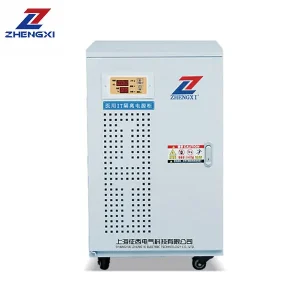
ZHENGXI specializes in high-performance 3 phase isolation transformers for industrial and commercial applications.
✔ OEM & customization available
✔ Fast delivery for bulk orders
✔ Exported to 50+ countries
👉 Contact our team today to get a customized transformer solution for your project.
Conclusion
Wiring a 3 phase isolation transformer requires both technical knowledge and attention to detail. By following correct wiring procedures, choosing the right configuration, and using high-quality equipment, you can ensure long-term system safety and performance.
For industrial buyers and engineers, investing in reliable transformers and proper installation is the key to stable and efficient power systems.




 EN
EN  DE
DE  ES
ES  FR
FR  RU
RU  PT
PT  IT
IT  JA
JA  DA
DA  PL
PL  NL
NL  TR
TR