

Because of how it is built and how well it works, the autotransformer is one of the most important parts of the power system and electrical equipment. The autotransformer is an important part of voltage conversion, power filtering, and other electrical tasks because it works well and uses little energy. The purpose of this piece is to give you a complete and in-depth understanding of the autotransformer by going into great detail about its definition, structure, how it works, possible uses, pros and cons.
What is an autotransformer?
An autotransformer is a special kind of transformer where the main and secondary windings share part of the winding to move power from one place to another. Unlike a normal two-winding transformer, this one shares some of its primary and secondary windings. This makes the voltage step-up and step-down process more efficient while also making it smaller and lighter. The basic idea behind how an autotransformer works is electromagnetic induction, which changes the voltage with different parts of the same wire.
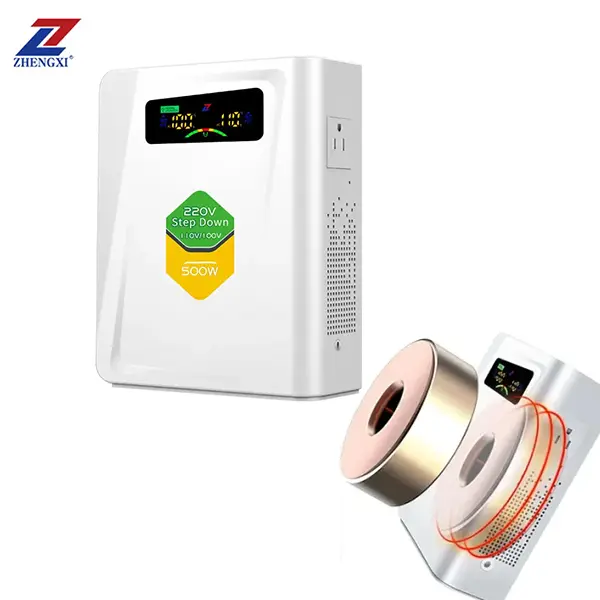
Features of the autotransformer’s structure
Small and light
Because a part of the windings in the primary and secondary is shared, the autotransformer has a more compact structure. It’s smaller and lighter compared with traditional transformers, which makes the autotransformer more suitable for shipping and installation in space.
Small short-circuit resistance
The autotransformer has small short-circuit impedance, which under the same conditions, means that the voltage change rate of the autotransformer is small, while the short-circuit current is large, which can provide better voltage stability.
Direct electrical link on the secondary side
In addition to the magnetic coupling, there is also a direct electrical connection between the main and the secondary sides of the autotransformer. This kind of design offers advantages for some special applications but may also bring certain safety hazards.
Fewer winding turns
Because the primary and the secondary share several windings, the autotransformer has fewer numbers of winding turns compared to traditional transformers, which reduces the leakage reactance created when the current passes through the winding further improving the efficiency.
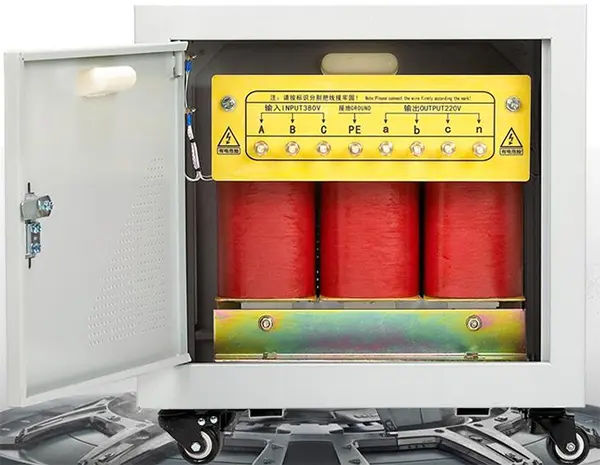
Working concept of autotransformer
The working principle of an autotransformer is like that of any other conventional transformer, both acting on the principle of electromagnetic induction. When an electric current enters the input end (primary side), the winding creates a magnetic field. This magnetic field permeates through the shared primary and secondary windings and hence creates a voltage on the secondary side. Since part of the winding is shared by the primary and secondary sides, the ratio of voltage increase or decrease is based on the turns ratio of the winding.
In particular, if the input voltage is V1, the relationship between the output voltage V2 and V1 depends upon the turns ratio of the wire. For instance, if the turning ratio between the two sides is 2:1, then the output voltage will be half of the input voltage. This structure of the autotransformer not only lowers power consumption but also improves energy efficiency.
What is the function of the autotransformer?
The key functions of autotransformers include the following:
Voltage regulation
Most autotransformers are used for voltage regulation and can successfully adjust the output voltage to meet the requirements of different loads. It is widely used in power systems, industrial equipment, and home appliances to ensure voltage stability and improve the working efficiency of equipment.
Reduced motor starting current
At the moment of motor start, the autotransformer reduces the voltage to minimize current effect at the instance of motor start-up, thereby limiting the impact on the power grid and protection of electrical equipment.
Energy saving
Due to this design, the autotransformer can achieve efficient voltage conversion with a smaller size and weight, reduce energy loss, and improve the total energy efficiency of the equipment.
What is the voltage supplied to the autotransformer called?
In an autotransformer, the normal input voltage is known as primary voltage. The voltage at the input of a transformer enters the transformer via its primary winding and causes a rise in voltage by electromagnetic induction through the part of the winding shared with the secondary winding. The voltage on the primary determines the magnitude of the output voltage, and the voltage that shows on the secondary side will be determined by how that voltage on the primary compares to the voltage at the secondary.
The output voltage is called secondary voltage, which is the voltage transformed in an autotransformer and generally higher or lower than the input voltage, depending on the turns ratio of the windings. The relationship of the secondary voltage and primary voltage of an autotransformer is chosen based on the design parameters of the transformer, such as turns ratio and input voltage.
What are autotransformers used for
The autotransformer is widely used in modern business and life. Here are some popular application scenarios:
Motor step-down starting
In the case of big motors, especially industrial equipment with high starting torque, an autotransformer is widely used. In such cases, the starting voltage is reduced so that the current at motor starting is lowered to avoid grid fluctuations and equipment damage.
Power system voltage control
It is employed in the regulation of voltage in the power system to ensure the stability of voltage in power grids and deal successfully with the impact that fluctuations in the load may have on the quality of power.
Industrial Power System
In such power systems as industrial automation equipment, inverters, frequency converters, the autotransformer used for voltage regulation and power filtering plays a key part.
New Energy System
In new energy systems, such as wind power generation and solar power generation, autotransformers are used for voltage up and down switching to ensure the compatibility of the power generation system with the power grid.
Summary
In recent decades, autotransformer technology has grown as a powerful, energy-saving power device and been widely applied in many industrial and electronic systems. Due to its feature of achieving voltage rise and fall by sharing windings, the autotransformer gives way to a more compact, economic, and efficient option. For some special applications, the autotransformer reduces the starting current of the motor and consequently decreases the effect on the power grid. However, it also has some drawbacks, such as poor electrical isolation and overvoltage problems that could arise. Therefore, the type of transformer to be used in practical applications should be appropriately chosen based on needs and conditions.
Through the introduction of this article, I hope you can have a more comprehensive and in-depth knowledge of autotransformer. In power systems, motor starting, or in the field of power supply equipment and new energy, it plays an indispensable part.
Related Products
-
 Heavy Duty 5000W Voltage Converter Transformer | Step Up/Down 110-220V | Circuit Breaker Protection
 -
 DG 3kva-30kva Single Phase Dry Type Auto Transformer
 -
 BK industrial control power transformer 440v to 220v 0.1kva-5kva
 -
 YH 500w-3Kw Step Down Transformer 220v To 110v Factory Direct Price
 -
 GBK2 single phase low voltage 120v to 120v toroidal isolation transformer 300va-2000va
 -
 Best wifi smart low voltage landscape lighting transformer 120VAC to 12V/14V AC with 3 Zones




 EN
EN  DE
DE  ES
ES  FR
FR  RU
RU  PT
PT  IT
IT  JA
JA  DA
DA  PL
PL  NL
NL  TR
TR