110V to 220V Voltage Converter | Step-Up Transformer Manufacturer
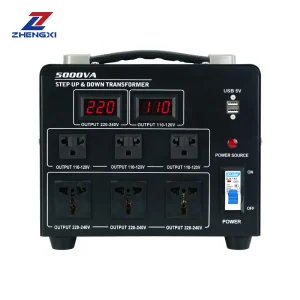
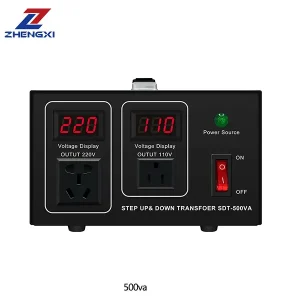
A voltage converter from 110V to 220V is used for operating equipment that requires a voltage of 220V from a source that requires a voltage of 110V/120V.
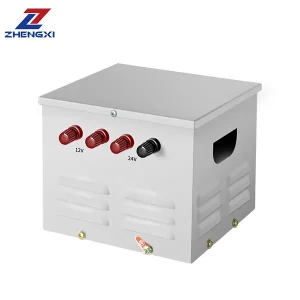
This can be done for most industrial and commercial applications by a step-up transformer.
This type of voltage converter is often used for exported machines, industrial, and commercial equipment.
The correct sizing depends mainly on load type and starting current.
Basic selection rules:
Choose 1.5× to 3× of your equipment’s rated power
For motors or compressors, allow extra capacity for startup surge
Confirm voltage compatibility (110V → 220V / 230V / 240V)
Match frequency (50Hz or 60Hz)
Use an isolation transformer for sensitive or critical equipment
In most cases, oversizing slightly improves reliability and lifespan.
Power Sizing Example 500W device → use 750W–1500W transformer 1000W motor → use 2000W–3000W transformer Mixed loads → size based on the highest surge load
110V to 220V Converter Calculator
Voltage Converter Calculator
Types of 110V to 220V Converters
Step-Up Transformer The most common solution. Suitable for industrial and continuous use.
Isolation Transformer Provides electrical isolation for safety and noise reduction. Used in medical, laboratory, and sensitive systems.
Auto Transformer Smaller and more cost-effective, but without isolation. Used where protection is not required.
Typical Applications
110V to 220V transformers are widely used in:
Exported machinery (US equipment used overseas)
Industrial equipment and production lines
HVAC systems, compressors, and pumps
Commercial kitchen equipment
Laboratory and testing instruments
Construction sites and temporary power systems
Technical Specifications (Typical Range)
Input Voltage: 110V / 115V / 120V
Output Voltage: 220V / 230V / 240V
Power Range: 100W – 500kVA
Frequency: 50Hz / 60Hz
Efficiency: ≥95%
Cooling: Air or fan cooling
Protection: Overload, short circuit, over-temperature
Common Mistakes to Avoid
Undersizing the transformer
Ignoring motor starting current
Choosing auto transformer when isolation is needed
Mismatched frequency (50Hz vs 60Hz)
Poor ventilation causing overheating
These issues are common and can significantly reduce equipment lifespan.
When Do You Need an Isolation Transformer?
Use an isolation transformer if:
The equipment is sensitive to electrical noise
Safety isolation is required
The system includes medical or precision instruments
Quick Summary
A 110V to 220V converter is typically a step-up transformer Proper sizing (1.5×–3×) is critical Inductive loads require higher capacity Isolation transformers improve safety and stability
In real projects, selection often depends on details like load type, startup current, and usage environment.
If you share a few basic parameters (power, load type, voltage), we can quickly suggest a suitable configuration and avoid oversizing or underperformance.





 EN
EN  DE
DE  ES
ES  FR
FR  RU
RU  PT
PT  IT
IT  JA
JA  DA
DA  PL
PL  NL
NL  TR
TR