

In today’s global marketplace, electrical equipment often needs to bridge regional voltage differences. A 220V To 110V Transformer is an essential device that allows appliances designed for 110‑volt systems to operate safely on 220‑volt mains. Whether you’re a manufacturer, an industrial user, or a frequent traveler, understanding how a step down transformer 220V to 110V works, its benefits, and best practices for selection is crucial.
What Is a 220V To 110V Transformer?
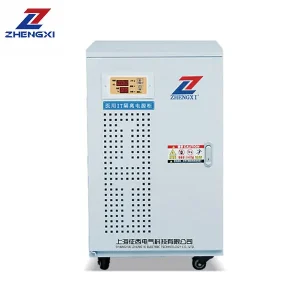
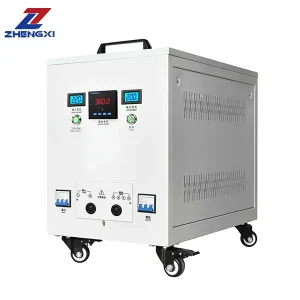
A 220V To 110V Transformer, also known as a step down transformer, converts higher input voltage (220 volts) down to a lower output voltage (110 volts). It uses electromagnetic induction between two windings—a primary winding connected to the 220V supply and a secondary winding delivering 110V to the load. This seamless voltage conversion ensures compatibility and safety for 110V‑rated devices.
How Does a Transformer 220V To 110V Work?
- Primary Winding: When 220V AC is applied, it creates a magnetic flux in the core.
- Magnetic Core: The laminated iron core efficiently transfers the magnetic field from primary to secondary winding.
- Secondary Winding: The magnetic flux induces 110V AC across the secondary winding, proportional to the turns ratio (primary:secondary).
- Regulation & Protection: High‑quality units include built‑in surge protection, thermal cut-offs, and voltage regulation for consistent output.
Key Features of a 220V 110V Transformer
- High Efficiency: ≥98% energy transfer minimizes losses during conversion.
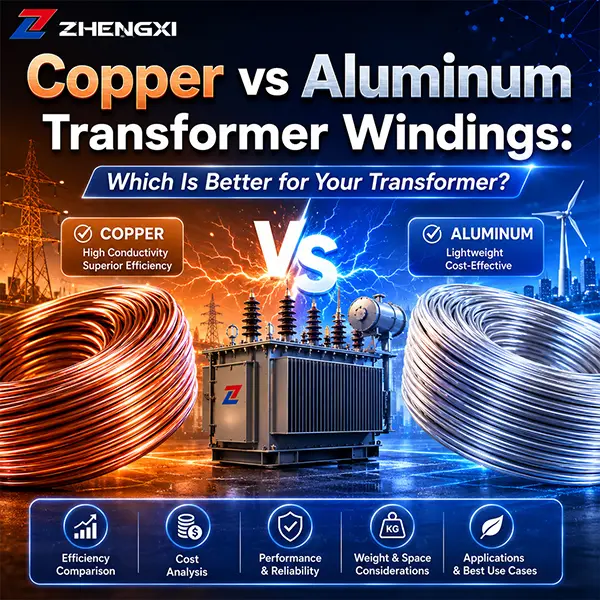
- Robust Construction: Industrial‑grade copper windings and silicon steel cores for durability.
- Compact Design: Space‑saving enclosures suitable for home, office, and industrial panels.
- Thermal Protection: Auto‑shutoff in case of overheating to protect both transformer and connected devices.
- EMI Suppression: Filters to reduce electromagnetic interference, ensuring clean power output.
- Multiple Power Ratings: Available from 100VA up to several kVA to handle various loads.
Applications of Transformers From 220V To 110V
- Home Appliances: Refrigerators, microwaves, and entertainment systems imported from 110V regions.
- Industrial Machinery: CNC machines, laser cutters, and diagnostic equipment requiring stable 110V input.
- Medical Devices: Sensitive instruments that need precise voltage control for accurate readings.
- IT & Networking: Servers, routers, and network switches designed for 110V operation.
- Travel & Hospitality: Hotel rooms or trade show booths serving a mix of international visitors.
Why Choose Our 220V To 110V Step Down Transformers
- Best Step Down Transformer 220V To 110V: Our models are rigorously tested to meet global safety standards (IEC, CE, RoHS).
- Superior Quality Components: We source oxygen‑free copper and low‑loss cores for exceptional performance.
- Customizable Solutions: OEM/ODM options for specific voltage ratios, power ratings, and form factors.
- Expert Support: Technical guidance on transformer selection, installation, and maintenance.
- Competitive Pricing: Cost‑effective without compromising on reliability or service life.
Installation and Wiring Instructions
- Mounting: Secure the transformer on a firm, ventilated surface.
- Primary Connection: Connect the live (L) and neutral (N) of your 220V supply to the transformer’s primary terminals.
- Secondary Connection: Wire the output live and neutral to your 110V appliance.
- Grounding: Ensure the transformer’s chassis is properly earthed to prevent electric shock.
- Startup: Apply power and verify the output voltage with a multimeter before connecting sensitive loads.
Maintenance Tips for Longevity
- Periodic Inspection: Check for loose connections, dust accumulation, and signs of overheating.
- Load Balancing: Avoid continuous operation at maximum capacity to reduce thermal stress.
- Environmental Control: Keep the transformer in a dry, temperature-controlled environment.
- Surge Protection: Install surge arresters upstream to guard against voltage spikes.
FAQ
Q1: Can I use a 220V to 110V step down transformer for all my appliances?
A: It depends on the appliance’s power rating. Always choose a transformer with a VA rating at least 20% higher than the appliance’s maximum load.
Q2: What is the difference between an autotransformer and an isolation transformer 220V to 110V?
A: An autotransformer shares part of the winding between input and output, offering a cost-effective solution but without full galvanic isolation. Isolation transformers provide complete electrical separation, enhancing safety and noise suppression.
Q3: How do I determine the right size transformer from 220V to 110V?
A: Sum the wattage of all devices you plan to connect, then divide by the output voltage (110V) to get the required current. Multiply by a safety margin (1.2–1.5) to select the appropriate VA rating.
Q4: Are 220V 110V transformers noisy?
A: Quality transformers operate quietly. Audible noise typically indicates magnetostriction or that the unit is overloaded. Ensure proper ventilation and correct sizing to minimize noise.
Q5: Can I connect multiple devices to one transformer 220V to 110V?
A: Yes, provided the total load does not exceed the transformer’s rated capacity. Distribute high‑inrush devices (e.g., motors) across multiple transformers if necessary to avoid voltage dips.
By integrating these insights and best practices, choosing the right 220V To 110V Transformer becomes straightforward. Whether you need a step down transformer, a high‑capacity 220V 110V Transformer, or a specialized transformer from 220V to 110V, our range delivers safety, reliability, and efficiency for any application.
Related Products





 EN
EN  DE
DE  ES
ES  FR
FR  RU
RU  PT
PT  IT
IT  JA
JA  DA
DA  PL
PL  NL
NL  TR
TR