

Selecting the correct pure sine wave inverter size is essential for ensuring reliable power delivery, protecting sensitive electronics, and preventing inverter overload.
If an inverter is undersized, it may shut down during peak demand or appliance startup. If it is oversized, system cost and standby energy consumption may increase. Proper inverter sizing ensures the power system operates safely, efficiently, and with enough capacity for future expansion.
Whether you are designing a solar power system, RV electrical setup, off-grid battery system, or industrial DC-AC conversion solution, choosing the correct inverter capacity is a critical engineering decision.
In this guide, we explain how to size a pure sine wave inverter step by step, including:
- calculating total load power
- accounting for surge power requirements
- selecting the correct DC system voltage
- considering inverter efficiency
- choosing inverter capacity for real-world applications
This practical method is widely used in solar energy systems, mobile power solutions, and backup power installations.
What Is a Pure Sine Wave Inverter?
A pure sine wave inverter converts DC power from batteries or solar panels into AC electricity with a waveform identical to the power supplied by the utility grid.
Unlike modified sine wave inverters, pure sine wave models generate a smooth and continuous waveform, which provides better compatibility with modern electrical devices.
Key benefits include:
- Lower harmonic distortion
- Reduced electromagnetic interference
- Improved efficiency for inductive loads
- Better performance for sensitive electronics
Because of these advantages, pure sine wave inverters are widely used in:
- solar power systems
- backup battery systems
- RV and marine power systems
- industrial automation equipment
They are especially important for devices such as computers, medical equipment, refrigerators, variable-speed motors, and laboratory instruments.
How to Size a Pure Sine Wave Inverter (Quick Formula)

A practical sizing rule used by many power engineers is:
Recommended inverter size = Total continuous load × 1.25
This additional capacity provides a 25% safety margin to prevent overload and allow for future device expansion.
Example:
Total load power = 600W
Safety margin = 25%Recommended inverter size ≈ 750W
In this case, selecting a 1000W pure sine wave inverter would provide safe and stable operation.
However, inverter sizing also requires considering surge power, system voltage, and efficiency, which we explain in the following sections.
Step 1 – Calculate Total Load Power for a Pure Sine Wave Inverter
The first step in sizing a pure sine wave inverter is determining the total continuous power consumption of all devices connected to the inverter.
Most electrical devices display their rated power on a label or power adapter.
If the label shows current instead of wattage, you can calculate power using:
Power (W) = Voltage (V) × Current (A)
Example Load Calculation
| Device | Rated Power |
|---|---|
| Laptop | 100 W |
| LED Lighting | 60 W |
| Refrigerator | 150 W |
| Router | 20 W |
Total continuous load:
330W
However, inverter capacity should never match the exact load value. A safety margin is necessary.
Recommended Safety Margin
Engineers typically recommend adding 20%–30% additional capacity.
Example:
330 W × 1.3 ≈ 430 W
Therefore, a 500W pure sine wave inverter would be an appropriate minimum choice.
Step 2 – Consider Surge Power When Sizing an Inverter
Many electrical devices require higher power during startup, known as surge power or inrush current.
This is especially common in motor-driven appliances such as:
- refrigerators
- air conditioners
- pumps
- compressors
- power tools
Typical surge multipliers include:
| Appliance | Startup Surge |
|---|---|
| Refrigerator | 3× running power |
| Air conditioner | 4–6× |
| Water pump | 3–5× |
| Power tools | 2–3× |
Example
Refrigerator running power:
150W
Startup surge:
150W × 3 = 450W
If multiple appliances start simultaneously, surge power can increase significantly.
Therefore, when selecting a pure sine wave inverter, always check both:
- continuous power rating
- peak surge power capacity
Many high-quality inverters can handle 2× surge power for several seconds.
Step 3 – Choose the Right DC Voltage for the Inverter System
Inverters operate using different DC input voltages, commonly:
- 12V systems – small power systems, vehicles, RVs
- 24V systems – mid-size solar installations
- 48V systems – residential or commercial energy storage systems
Higher DC voltage systems are more efficient for large power loads because they reduce current and cable losses.
Example Current Comparison for a 1000W Load
| DC Voltage | Current |
|---|---|
| 12V | 83 A |
| 24V | 41 A |
| 48V | 21 A |
Lower current reduces:
- cable heating
- voltage drop
- energy loss
For inverter systems above 2000W, engineers often recommend 24V or 48V battery banks.
Step 4 – Consider Pure Sine Wave Inverter Efficiency
Inverters are not 100% efficient. Most pure sine wave inverters operate with an efficiency of 85%–95%.
This means the DC power drawn from the battery is higher than the AC output power.
The input power can be estimated using:
Input Power = Load Power ÷ Efficiency
Example:
Load = 500W
Efficiency = 90%Input power ≈ 556W
Higher efficiency results in:
- longer battery runtime
- lower heat generation
- improved system performance
For solar and battery storage systems, choosing a high-efficiency inverter (90%+) is highly recommended.
How to Size a Pure Sine Wave Inverter for Different Applications
Different applications require different inverter capacities.
Home Backup Power Systems
Typical loads include:
- refrigerator
- lighting
- WiFi router
- television
- phone chargers
Recommended inverter capacity:
1000W – 3000W
Solar Power Systems
Solar installations may power:
- household appliances
- water pumps
- air conditioners
- battery storage systems
Recommended inverter size:
3kW – 10kW or higher
RV and Mobile Power Systems
Common devices include:
- microwaves
- coffee machines
- laptops
- charging stations
Recommended inverter size:
1000W – 3000W
Industrial Power Systems
Industrial applications may include:
- motors
- automation controllers
- monitoring equipment
These systems often require high-capacity pure sine wave inverters with strong surge capability.
Pure Sine Wave vs Modified Sine Wave Inverter
| Feature | Pure Sine Wave | Modified Sine Wave |
|---|---|---|
| Waveform | Smooth sinusoidal output | Stepped waveform |
| Device compatibility | Excellent | Limited |
| Efficiency | Higher | Moderate |
| Electrical noise | Low | Higher |
| Equipment lifespan | Longer | Shorter |
Sensitive electronics such as medical equipment, audio systems, and variable-speed motors perform significantly better when powered by a pure sine wave inverter.
How to Choose the Right Pure Sine Wave Inverter
When selecting an inverter, consider the following checklist:
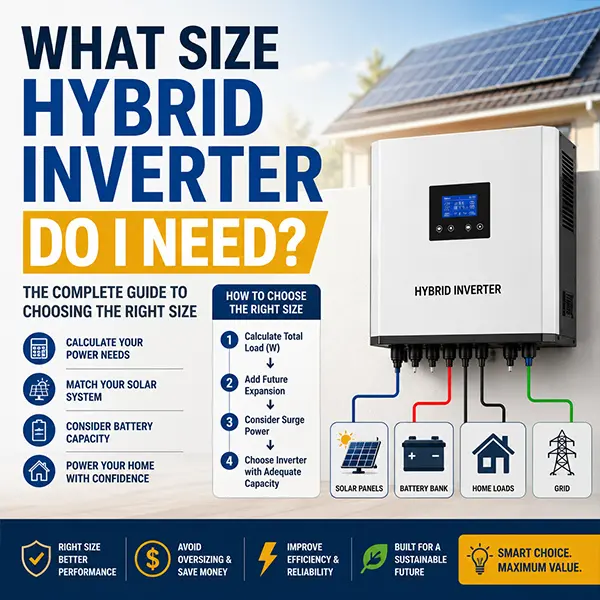
- Calculate total load power
Add the wattage of all devices. - Determine surge requirements
Consider startup power for motors and compressors. - Add a safety margin
Usually 25–30% extra capacity. - Select the correct system voltage
12V for small systems, 24V or 48V for larger installations. - Check inverter efficiency
Look for models with 90% or higher efficiency. - Verify protection features
Reliable inverters should include:
- overload protection
- short-circuit protection
- over-temperature protection
- low battery shutdown
FAQ
Most refrigerators consume 100–200W during normal operation, but startup surge can reach 600–800W.
A 1000W pure sine wave inverter is usually recommended for reliable operation.
Yes. Slightly oversizing an inverter improves reliability and allows additional devices to be added later. However, extremely large inverters may operate less efficiently at very low loads.
Yes. Pure sine wave inverters produce utility-grade AC power, making them suitable for computers, medical equipment, audio systems, and laboratory instruments.
Conclusion
Properly sizing a pure sine wave inverter ensures stable system performance, protects connected equipment, and improves overall energy efficiency.
The key steps include:
- calculating total continuous load
- considering surge power requirements
- selecting appropriate DC system voltage
- adding a safety margin
- verifying inverter efficiency and protection features
As solar energy systems and backup power solutions continue to grow worldwide, choosing the correct inverter capacity is essential for building a reliable power system.
Need Help Choosing the Right Pure Sine Wave Inverter?
Selecting the correct inverter size depends on factors such as load type, surge requirements, battery voltage, and application environment.
If you are designing a solar power system, RV power system, or industrial DC-AC solution, our engineers can help you choose the most suitable pure sine wave inverter capacity.
Contact us to get:
- professional inverter sizing recommendations
- customized inverter solutions
- OEM and bulk supply options




 EN
EN  DE
DE  ES
ES  FR
FR  RU
RU  PT
PT  IT
IT  JA
JA  DA
DA  PL
PL  NL
NL  TR
TR