

♦How to choose a three-phase voltage stabilizer?
Three-phase voltage stabilizers are important instruments to ensure the normal work of industrial devices, commercial systems, and big household appliances. Especially in areas where there is a frequently fluctuated power grid, three-phase voltage regulators will regulate the input voltage effectively and then offer safe and stable power for equipment. How to select correctly, install correctly, safely use a three-phase voltage regulator? The following questions will be answered by ZHENGXI.
1. Determine the power demand of the equipment
In selecting a three-phase voltage stabilizer, you have to understand the overall power requirement of all electrical equipment. It should be noted that the selection of the voltage stabilizer should be 20%-30% higher than the actual load to avoid the impact caused by the starting current.
For purely resistive loads, such as incandescent lamps, resistance furnaces, the power of the voltage stabilizer must be 1.5 – 2 times that of the equipment.
For inductive and capacitive loads like motors, water pumps, air conditioners, it is recommended that the power of voltage stabilizer is 3 times to cope with sudden increase in starting current.

2. Input and output voltage range
When choosing a AVR voltage regulator, first of all, make sure the input voltage range is appropriate for local power grid fluctuations. For example, the voltage stabilizer that you can use in such areas where voltage fluctuations are huge is one whose input range can allow 304-456V so that it allows for stable power supply.
3. Voltage stabilization accuracy and response speed
High-precision voltage regulators can be applied to equipment that requires high voltage stability, such as precision instruments and data centers. The voltage stabilization accuracy is ±2%-3%.
If there is a requirement for response speed, you can choose servo motor-type voltage stabilizer, whose response speed is usually ≤1s.
4. Choose the right type of voltage stabilizer
Servo control voltage stabilizer: apply to scenes that need quick adjustment of voltage.
Static Voltage Stabilizer: The design is contact-free, maintenance-free, and suitable for applications that require long-time running continuously.
For the differences of two in technical parameters, please refer to: Differences between Servo and Static Voltage Stabilizers
♦ Safety issues of three-phase voltage stabilizer and how to connect them
1. Grounding and protection
The voltage stabilizer should be reliably grounded in order to avoid leakage accidents. The grounding line should never be connected to the public facilities such as a water supply and gas pipelines.
Lightning arrester: The voltage stabilizer should be installed in one surge protection device, avoiding bad damage by a stroke of lightning or instantaneous voltage fluctuation in the power network.
2. Correct wiring
In this condition, the input and output wires should be in a state to carry sufficient current at the time of installation to avoid hazards of safety due to heating of the wires.
Loose or not equipment terminals should be checked from time to time to avoid any sort of short circuit or fire.
3. Precautions for equipment operation
Shall not dismantle the voltage stabilizer without permission or change at will. The maintenance should not be done by any non-professional to avoid accidents of electric shock.
The voltage stabilizer should be installed in such a manner to avoid strong vibration during operation; otherwise, this may damage its internal parts.
♦ Installation and use guide of three-phase voltage stabilizer
1. Installation steps
Choose an appropriate installation place: Ensure that the stabilizer is put in a dry and ventilated place, away from direct sunlight and moisture.
Wiring method: Make sure the voltage of the input power supply and output device match, and connect the three-phase power supply strictly in accordance with instructions.
Test and debugging: Before first-time usage, start a no-load test with the output voltage within a normal range before the connection of any device.
2. Usage suggestions
The voltage stabilizer should be used under conditions of load below the rated power to extend its service life.
When this device is not in use for a long period, the power switch should be turned off for energy saving.
3. Common fault handling
Unstable output voltage: Check if the input voltage is within the applicable range of the device, and confirm whether wiring is firm.
Device overheating: Ensure voltage stabilizer is well ventilated and clean up the dust from the heat dissipation port regularly.
♦ FAQ
1. What is the difference between a three-phase voltage stabilizer and a single-phase voltage stabilizer?
Single-phase voltage regulators are used for household electricity and small appliances, while three-phase voltage regulators are better fitted for large industrial equipment and commercial uses.
2. What should be paid attention to when installing a three-phase voltage stabilizer?
During installation, guarantee that wiring is appropriate, the equipment is reliably grounded, and that the operation is carried out by a professional electrician.
3. How do I choose the appropriate power of a three-phase voltage stabilizer?
Based on the type of equipment and power requirement, choose appropriate a voltage stabilizer. It is advisable to leave some headroom on the power.
♦ Conclusion
In this regard, choosing a proper three-phase voltage stabilizer is very important for the safety and stability of the electrical equipment. We hope that based on this, you may know more about the selection, installation, and using techniques of three-phase voltage regulators. If you have any problems, please contact us for technical support.
♦ Choose your best three-phase voltage stabilizer now!
-
 SBW 60kva-300kva outdoor 3 phase servo automatic voltage stabilizer rainproof type
 -
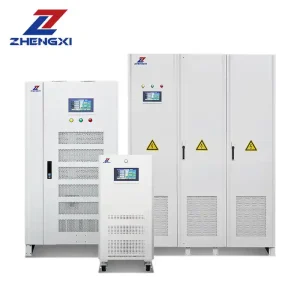 100Kva-4000Kva Three-Phase Fully Automatic Intelligent Igbt Based Static Voltage Stabilizer
 -
 ASR WIFI Intelligent Three-Phase Static Contactless Voltage Regulator
 -
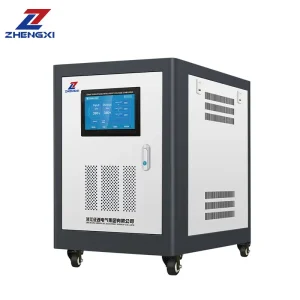 Three-Phase Copper Column AC Automatic Voltage Stabilizer SBW-N 10Kva-200Kva
 -
 TNS 3 Phase Industrial Servo Electrical Voltage Stabilizer 20kva-120kva
 -
 100Kva-2000Kva 3-phase fully automatic intelligent static voltage regulator with overcurrent protection


 EN
EN  DE
DE  ES
ES  FR
FR  RU
RU  PT
PT  IT
IT  JA
JA  DA
DA  PL
PL  NL
NL  TR
TR