

In power management systems, maintaining a steady voltage supply is critical, especially in industries that rely on three-phase power setups. Voltage stabilizers play a vital role in ensuring that equipment and machinery receive consistent power, preventing damage from overvoltages, undervoltages, or power surges. However, not all stabilizers are the same. There are two primary types: automatic and manual 3-phase voltage stabilizers. Although they share a similar purpose, their functionalities and applications differ significantly. In this post, we’ll explore the key differences between automatic and manual 3-phase voltage stabilizers, helping you make an informed decision on which one best suits your needs.
What is a 3-Phase Voltage Stabilizer?
A 3-phase voltage stabilizer is designed to regulate the voltage supplied to equipment that operates on a three-phase power system. By ensuring that the voltage levels remain stable, it protects sensitive machinery from voltage fluctuations that can lead to equipment malfunction or damage. These stabilizers can be found in a variety of industries, including manufacturing, medical devices, IT data centers, and more.
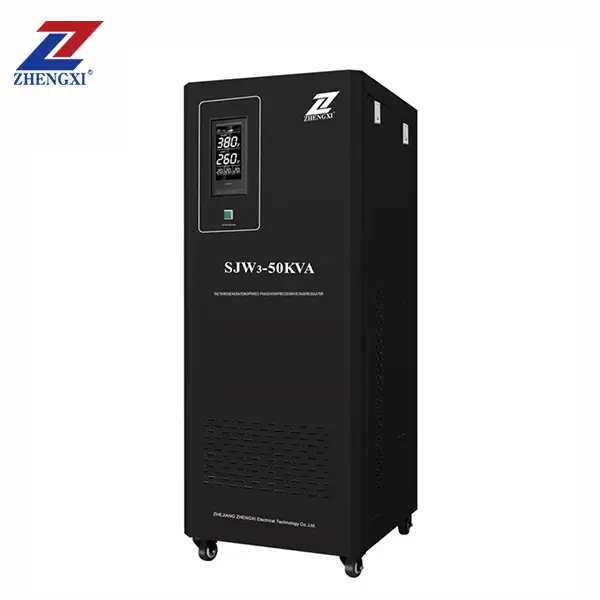
Manual 3-Phase Voltage Stabilizers
A manual 3-phase voltage stabilizer requires operator intervention to regulate the voltage output. This type of stabilizer typically involves using physical knobs or switches to adjust voltage levels. Manual stabilizers are often employed in situations where voltage fluctuations are less frequent or predictable, and the need for real-time adjustment is minimal.
Key Features of Manual Voltage Stabilizers:
- Manual Operation: Operators are required to monitor and adjust the voltage manually, making this type of stabilizer less convenient in high-demand or unpredictable environments.
- Precision: The accuracy of the voltage regulation largely depends on the operator’s attention and skills. While sufficient in environments with mild voltage fluctuations, manual stabilizers may struggle with rapid or large voltage variations.
- Cost-Effective: Manual stabilizers are typically more affordable upfront compared to automatic systems, making them a practical option for users with budget constraints. However, the operational cost may increase over time due to the need for continuous monitoring and manual intervention.
Applications of Manual Voltage Stabilizers:
- Construction Sites: Where equipment can tolerate minor fluctuations, and manual intervention can be easily handled.
- Small-Scale Industries: Suitable for non-critical applications where voltage instability is rare, and regular manual adjustments are manageable.
- Home Use: Ideal for homes with fewer electrical devices that do not require constant voltage regulation.

Automatic 3-Phase Voltage Stabilizers
A 3-phase automatic voltage stabilizer operates independently to maintain voltage stability. Using built-in sensors and control systems, it detects voltage fluctuations and adjusts the output voltage accordingly, ensuring a consistent power supply to connected equipment.
Key Features of Automatic 3-Phase Voltage Stabilizers:
- Automation: Unlike manual systems, automatic 3-phase voltage stabilizers adjust voltage automatically without the need for human intervention. This makes them ideal for environments where voltage fluctuations are frequent or unpredictable.
- High Precision: Automatic stabilizers offer precise voltage regulation, typically within a ±1% fluctuation range. This is critical for protecting sensitive equipment such as medical devices, CNC machines, and IT servers.
- Ease of Use: With automatic operation, these stabilizers are user-friendly and require minimal maintenance. Once installed, they operate autonomously, providing continuous protection without any effort from the user.
- Long-Term Cost Efficiency: Although the initial investment is higher, automatic stabilizers reduce long-term operational costs by preventing equipment damage, minimizing downtime, and reducing maintenance.
Applications of Automatic Voltage Stabilizers:
- Industrial Environments: Ideal for large manufacturing units, CNC machines, and automated production lines, where uninterrupted voltage is necessary.
- Critical Systems: Perfect for IT data centers, hospitals, and laboratories, where equipment failure due to voltage fluctuations can be costly or life-threatening.
- Commercial Facilities: Ensures smooth operation in office buildings, retail stores, and commercial kitchens, where sensitive equipment like computers, servers, and refrigerators rely on stable voltage.
Key Differences Between Automatic and Manual 3-Phase Voltage Stabilizers
| Feature | Manual 3-Phase Voltage Stabilizer | Automatic 3-Phase Voltage Stabilizer |
|---|---|---|
| Operation | Requires human intervention to adjust voltage. | Operates automatically with no manual adjustments. |
| Precision | Dependent on operator skills and attention. | Provides high precision with automatic adjustments. |
| Ease of Use | Labor-intensive and requires continuous monitoring. | User-friendly with minimal intervention needed. |
| Applications | Suitable for non-critical setups with minor fluctuations. | Ideal for critical systems and environments with frequent voltage fluctuations. |
| Cost | Lower upfront cost but higher long-term operational costs. | Higher initial cost, but lower long-term costs due to reduced maintenance and downtime. |
Choosing the Right Stabilizer for Your Needs
When to Choose a Manual 3-Phase Voltage Stabilizer:
- Budget-Conscious Applications: If you are looking for a cost-effective solution and can manage voltage adjustments manually, a manual 3-phase voltage stabilizer can be a great option.
- Less Critical Equipment: Manual stabilizers are suitable for environments where minor voltage fluctuations won’t significantly affect the equipment’s performance, such as in small-scale industries or residential setups.
When to Choose an Automatic 3-Phase Voltage Stabilizer:
- Sensitive Equipment: If your equipment requires continuous, precise voltage regulation (such as medical instruments or servers), an automatic 3-phase voltage stabilizer is a must.
- High-Voltage Fluctuations: In environments where voltage instability is frequent or unpredictable, automatic stabilizers will ensure uninterrupted operation and protection for critical systems.
- Long-Term Investment: While automatic stabilizers may have a higher upfront cost, they provide long-term savings by reducing downtime, preventing equipment damage, and minimizing the need for constant monitoring.
FAQ
Q1: How does an automatic 3-phase voltage stabilizer work?
A: Automatic 3-phase voltage stabilizers detect fluctuations in the incoming voltage and use built-in sensors and control mechanisms to adjust the output voltage, ensuring that equipment receives a consistent and stable power supply.
Q2: Can I use a manual voltage stabilizer in an industrial setting?
A: While manual 3-phase voltage stabilizers can be used in industrial settings, they are more suitable for environments where voltage fluctuations are rare and not critical. For industries that require continuous voltage stability, an automatic stabilizer is recommended.
Q3: What is the 3-phase voltage stabilizer price range?
A: The price of a 3-phase voltage stabilizer varies based on its type (manual or automatic), capacity, and features. Automatic stabilizers tend to be more expensive due to their advanced features, while manual stabilizers are more affordable upfront.
Conclusion
Choosing between a manual 3-phase voltage stabilizer and an automatic 3-phase voltage stabilizer depends on your application’s needs. For environments with frequent voltage fluctuations and sensitive equipment, an automatic stabilizer is the optimal choice. For simpler applications with minimal fluctuations, a manual stabilizer can provide a more budget-friendly solution.
If you need a reliable automatic voltage stabilizer for your industrial or commercial setup, ZHENGXI Electric offers high-quality 3-phase stabilizers designed to meet the highest standards. Contact us today for more information or to get a quote tailored to your voltage regulation needs.
Looking for a high-quality 3-phase voltage stabilizer? Contact us now for a consultation or explore our range of automatic and manual stabilizers designed to meet your specific requirements!



 EN
EN  DE
DE  ES
ES  FR
FR  RU
RU  PT
PT  IT
IT  JA
JA  DA
DA  PL
PL  NL
NL  TR
TR