

Single Phase Isolation Transformer


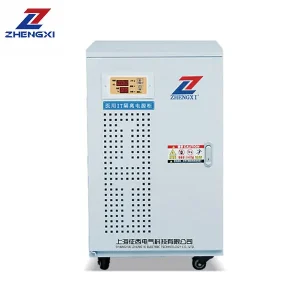

Reliable Electrical Isolation for Safety, Noise Reduction & Equipment Protection
The function of an isolation transformer is to isolate the circuitry of its input and output terminals. When used in practice, electrical isolation has a number of advantages apart from improving safety. For example, it minimizes noise, reduces interference, and protects equipment from voltage fluctuations.
Voltage fluctuations, interference, and ground loops often exist in the grid environment in industries. The absence of adequate electrical isolation makes the operation of equipment difficult and leads to various problems such as data loss. It works by placing a buffer between the power supply and your equipment.
The isolation transformer is popularly used in industries, medical devices, laboratory equipment, and export equipment.
Quick Selection Guide (Choose the Right Model in 30 Seconds)
To select the right transformer, start with these key parameters:
- Input Voltage (e.g. 110V / 220V / 380V)
- Output Voltage (same, step-up, or step-down)
- Rated Power (VA / kVA)
- Load Type (resistive / inductive / motor / electronics)
- Frequency (50Hz / 60Hz)
- Application environment
Practical tip:
Transformer capacity should generally be 20–50% higher than the actual load. This margin is important for handling startup current and avoiding long-term overheating.
How to Select a Single Phase Isolation Transformer (Engineer’s Guide)
Selecting a transformer is not just about matching voltage. From an engineering perspective, incorrect sizing often leads to overheating, noise issues, or reduced lifespan.
Step 1: Confirm Voltage Requirements
Match your available supply voltage and required output voltage.
For export equipment, voltage conversion and isolation are often required together.
Step 2: Calculate Required Capacity
Add up the total load power of all connected equipment.
Recommended sizing:
- Resistive loads → ≥1.2×
- Motor loads → ≥1.5–2×
- Mixed loads → ≥1.3–1.5×
Step 3: Consider Inrush Current
Motors, compressors, and switching power supplies can draw multiple times their rated current at startup. Undersizing here is a common cause of transformer failure.
Step 4: Choose Winding Material
- Copper winding → better conductivity, corrosion resistance, longer lifespan
- Aluminum winding → lower cost, suitable for general use
Step 5: Evaluate Installation Conditions
Consider ventilation, ambient temperature, humidity, and whether an enclosure is required.
Technical Specifications
| Parameter | Specification |
|---|---|
| Power Range | 100VA – 100kVA |
| Input Voltage | 110V / 120V / 220V / 230V / 380V (custom) |
| Output Voltage | Fully customizable |
| Frequency | 50Hz / 60Hz |
| Efficiency | ≥95% |
| Insulation Class | B / F / H |
| Cooling | Air-cooled / Natural |
| Protection | Overload / Short circuit (optional) |
| Temperature Rise | ≤80K |
| Noise Level | Low noise design |
Custom configurations such as enclosure type, terminal connections, and plug standards are available depending on project requirements.
Common Voltage Configurations (Quick Reference)
| Input Voltage | Output Voltage | Typical Application |
|---|---|---|
| 480V | 240V | Industrial machinery |
| 380V | 220V | Export equipment |
| 220V | 110V | US-standard devices |
| 120V | 120V | Isolation & noise filtering |
These are typical configurations. Actual selection should be based on load and application conditions.
Why Use a Single Phase Isolation Transformer?
Electrical Safety
Provides full isolation between input and output, reducing shock risks and leakage currents.
Noise Suppression
Reduces electrical noise and EMI interference, especially important for sensitive electronics and control systems.
Equipment Protection
Helps absorb voltage spikes and transient disturbances from the power grid.
Stable Power Supply
Improves voltage consistency under fluctuating conditions.
Ground Loop Elimination
Prevents unwanted circulating currents in complex systems.
Typical Applications
Isolation transformers are commonly used in:
- Industrial machinery and CNC equipment
- Medical and healthcare systems
- Laboratory and testing instruments
- Audio and communication systems
- Exported equipment requiring voltage adaptation
- Semiconductor and precision electronics
Different industries may have different insulation, leakage, or compliance requirements.
Isolation Transformer vs Autotransformer
| Feature | Isolation Transformer | Autotransformer |
|---|---|---|
| Electrical Isolation | Yes | No |
| Safety Level | High | Lower |
| Noise Reduction | Excellent | Limited |
| Application | Sensitive systems | General voltage conversion |
For applications involving sensitive electronics or safety-critical systems, isolation transformers are typically the preferred choice.
Compliance, Standards & Reliability
Depending on your target market, transformers can be manufactured to meet:
- UL / CSA standards (North America)
- CE certification (Europe)
- RoHS compliance
- ISO-certified production
Design considerations:
- Copper winding (optional) for higher durability
- Vacuum varnish insulation process
- Controlled temperature rise for long-term stability
From an engineering standpoint, insulation quality and thermal design are key factors affecting transformer lifespan.
Custom Isolation Transformer Solutions
We support flexible customization based on application requirements:
- Step-up / step-down voltage design
- Wide power range (VA to kVA)
- Open frame or enclosed structure
- Waterproof or outdoor enclosures
- Terminal blocks, sockets, or custom connectors
- OEM / private label support
- High temperature or high altitude environments
Most real-world projects require adjustments beyond standard models, especially when installation space, load characteristics, or compliance standards are involved.
Common Mistakes to Avoid
- Undersizing transformer capacity
- Ignoring startup (inrush) current
- Using autotransformer where isolation is required
- Mismatched frequency (50Hz vs 60Hz)
- Poor ventilation leading to overheating
These issues often do not cause immediate failure, but can significantly reduce equipment lifespan.
Why Work With Us
- 10+ years manufacturing experience
- Stable production and delivery capability
- OEM / ODM support
- Pre-sales and after-sales engineering support
- Competitive factory pricing
In many cases, the key is not just supplying a transformer—but ensuring it is correctly selected for your actual working conditions.
Get a Quote
To provide an accurate recommendation, please share:
- Input & output voltage
- Power rating (VA / kVA)
- Quantity
- Application details
- Certification requirements
We’ll review your specifications and provide a suitable model selection along with a quotation.
Related products


Explore all ZHENGXI models, specifications, and technical parameters in one complete catalog. Find the right voltage solution for your project.
Related Blogs
Are you looking for reliable suppliers and quality products? Fill out the form and send it to us — we’ll get back to you within 24 hours!
 EN
EN  DE
DE  ES
ES  FR
FR  RU
RU  PT
PT  IT
IT  JA
JA  DA
DA  PL
PL  NL
NL  TR
TR