

What Is Three‑Phase Load Imbalance?
When one phase of a three‑phase distribution transformer carries noticeably more or less current than the others—typically beyond a 1–2 % deviation—you introduce negative‑ and zero‑sequence currents into the system. This imbalance:
- Increases copper and core losses, lowering overall efficiency.
- Overheats the neutral conductor, risking insulation damage.
- Stresses windings mechanically, accelerating aging and shortening service life.
Over time, these effects compound, leading to unexpected downtime and higher maintenance costs.
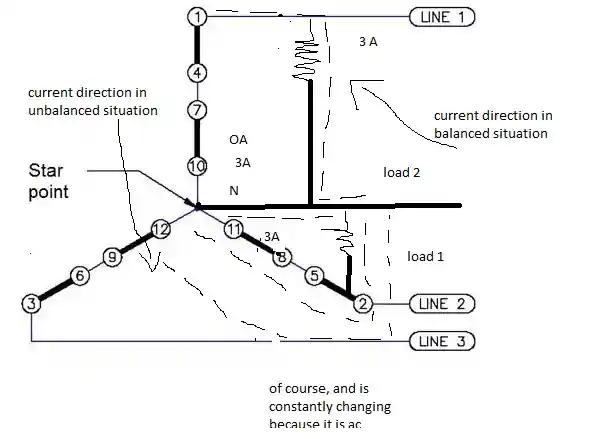
Where Distribution Transformers See Load Imbalance
Distribution transformers step medium voltages (11 kV–33 kV) down to utilization levels (400 V/230 V) in:
- Residential areas, where single‑phase appliances (AC units, ovens) dominate one phase.
- Commercial complexes, powering HVAC systems, elevators, and office equipment.
- Light‑industrial plants, driving motors and control panels.
- Renewable energy sites, such as solar farms with uneven string outputs.
In each scenario, erratic single‑phase load swings can push one phase well outside design balance, eroding transformer reliability.
Industry Trends & Authoritative Guidelines
- Rising Condition‑Monitoring Spend
Navigant Research forecasts that global spending on distribution transformer monitoring will jump from US $112 million in 2020 to US $755 million by 2025—driven by the need to catch imbalance‑related stresses early. - IEEE & IEC Standards
IEEE C57.110 details how unbalanced loading amplifies stray‑flux and eddy‑current heating; IEC 60076 similarly warns that even a 3 % current imbalance can raise winding temperatures by 10 °C or more. - IEEMA Best Practices
The Indian Electrical and Electronics Manufacturers’ Association recommends keeping voltage unbalance under 1 % and current unbalance under 2 % to preserve transformer life.
Each of these sources underscores that proactive imbalance management is no longer optional for utilities and end users alike.
How Imbalance Impacts Key Transformer Parameters
| Metric | Balanced | 3 % Imbalance | 5 % Imbalance |
|---|---|---|---|
| Copper Loss Increase | Baseline | +5 % | +12 % |
| Core Loss Increase | Baseline | +3 % | +7 % |
| Neutral Current (A) | ~0 A | Moderate | High |
| Winding Temperature Rise (°C) | +55 °C | +65 °C | +75 °C |
| Estimated Lifetime Reduction | – | –10 % | –25 % |
Source: IEEE C57.110 & IEC load‑test data
Beyond simple loss increases, delta‑wye transformers can circulate triplen harmonics in the delta winding—further magnifying eddy losses and core hotspots.
Balancing vs. Other Power‑Quality Solutions
| Solution Type | What It Fixes | Best Use Case | Relative Cost |
|---|---|---|---|
| Phase‑Balancing Transformer | Unequal phase currents | Sites with heavy single‑phase loads | Moderate |
| Harmonic Filter | Distorted waveforms | Nonlinear loads (e.g. drives) | High |
| Power‑Factor Correction | Low cos φ/kVA demand | Plant‑wide PF issues | Low–Moderate |
While filters and capacitors each address specific power‑quality issues, only a dedicated automatic phase‑balancer or load‑balancing transformer actively redistributes currents to restore three‑phase symmetry.
How to Choose the Right Distribution Transformer
- Winding Configuration
- Delta Primary absorbs triplen harmonics.
- Wye Secondary provides a solid neutral for unbalanced loads.
- Thermal Rating & Alarms
- Specify ≥ 15 % thermal reserve above your worst‑case imbalance losses.
- Look for built‑in RTD/PT100 sensors and real‑time alarm outputs.
- On‑Load Tap Changer (OLTC)
- Enables under‑load voltage regulation to correct phase‑to‑phase drops.
- Smart Monitoring
- IEC 61850‑compatible meters reporting negative‑sequence current and neutral current.
- Certifications
- CE, ISO9001, RoHS and compliance with IEEE C57 and IEC 60076 series.
Pro tip: In environments like data centers or EV‑charging hubs—where phase‑load swings can be extreme—pair your transformer with a static phase‑balancer for near‑perfect balance under dynamic conditions.
FAQs
1. How much imbalance is safe?
Industry guidelines recommend keeping voltage unbalance ≤ 1 % and current unbalance ≤ 2 % to avoid undue losses and overheating.
2. What life‑expectancy hit comes from imbalance?
A sustained 5 % current imbalance can cut insulation life by up to 25 %, due to higher winding temperatures and accelerated aging.
3. Can balancing gear eliminate imbalance entirely?
Static and auto‑balancing solutions can reduce imbalance below 1 %, but real‑world load variability means ongoing monitoring and adaptive management remain essential.
Conclusion
By understanding the root causes and consequences of three‑phase load imbalance—and by selecting the right distribution transformer and balancing accessories—you ensure maximum efficiency, longer service life, and rock‑solid power quality across residential, commercial, and industrial installations.
Related products
-

11KV S(B) H15 Hermetically-Sealed Oil-Immersed Amorphous Alloy Distribution Transformer
-

Box Type Outdoor Mobile Prefabricated Compact Power Electrical Substation YB-12 Series
-

D11 Single Phase Pole Mounted Power Distribution Transformer
-
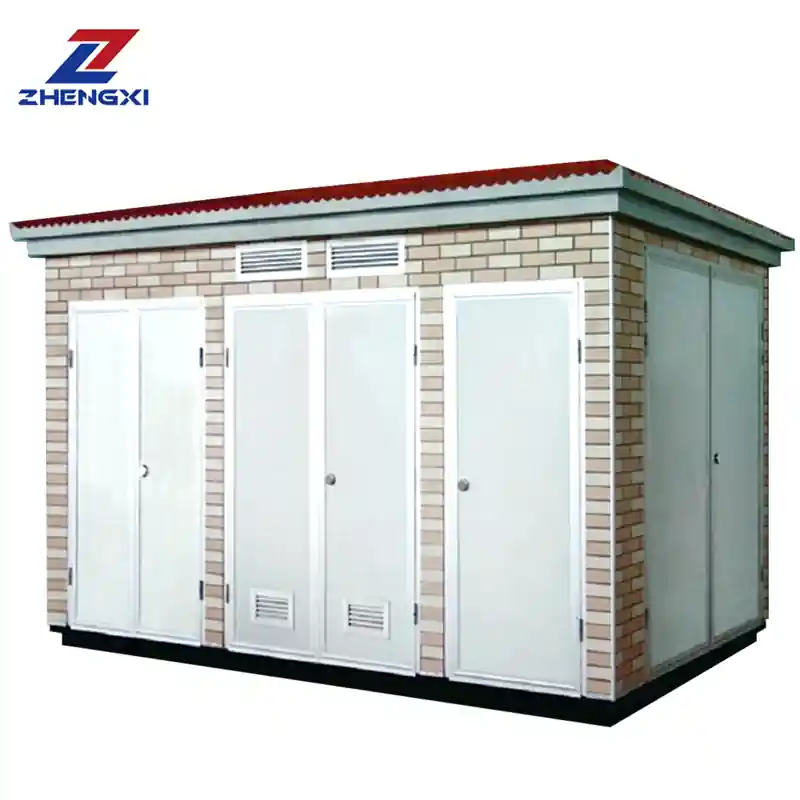
New YBF 35/0.4KV 630-2500Kva Ultra-energy Saving Compact European Substation





 EN
EN  DE
DE  ES
ES  FR
FR  RU
RU  PT
PT  IT
IT  JA
JA  DA
DA  PL
PL  NL
NL  TR
TR